
The AI Ethics Brief #195: When the Rules Arrive Late
AI's costs are landing in real places, and the people absorbing them are writing the rules after the fact, in council chambers and courtrooms.
Welcome to The AI Ethics Brief, a bi-weekly publication by the Montreal AI Ethics Institute. We publish every other Tuesday at 10 AM ET. Follow MAIEI on Bluesky and LinkedIn.
📌 Editor’s Note
In this Edition (TL;DR)
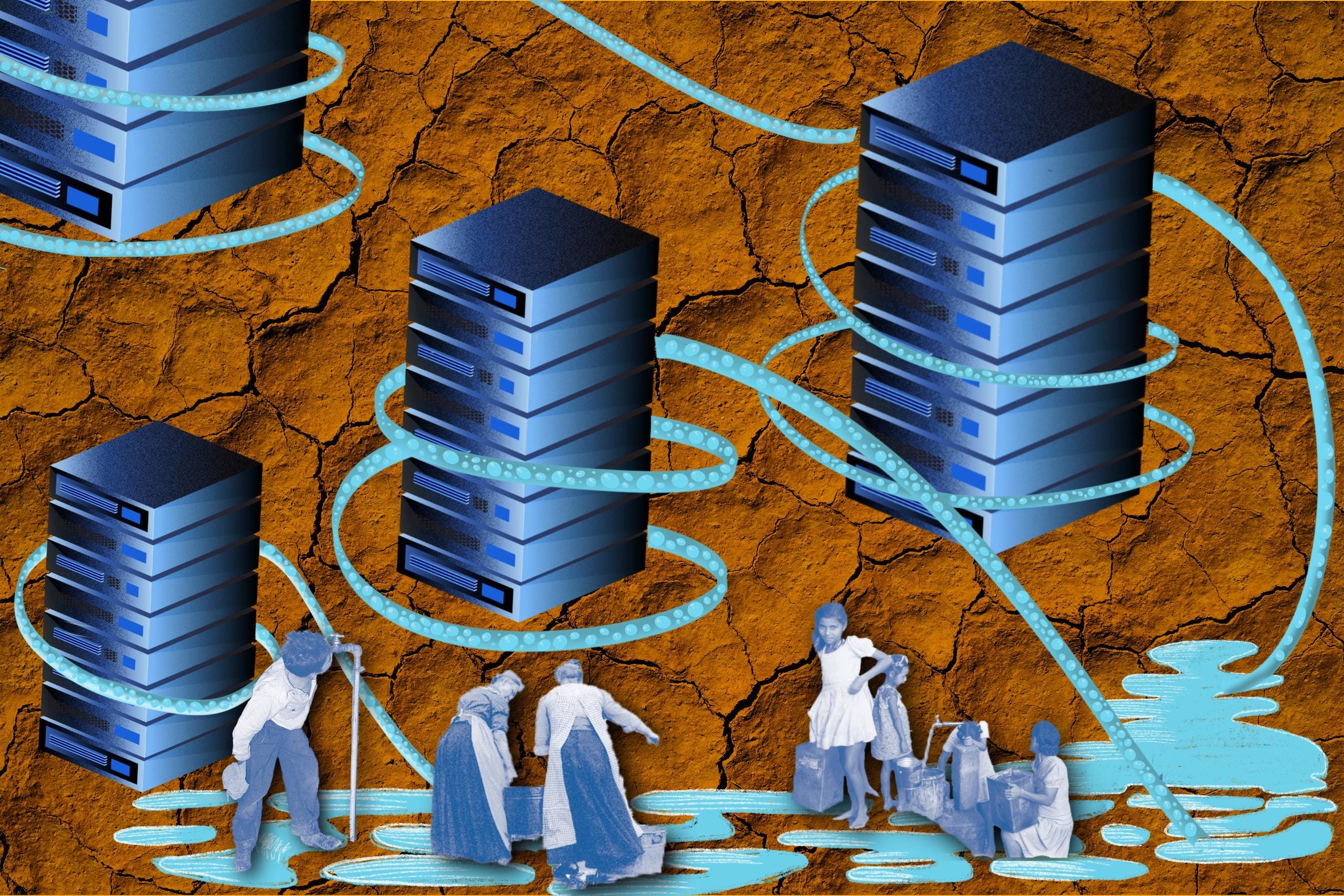
When the Data Centre Comes to Town: AI’s Footprint Meets Organized Resistance — The Stanford AI Index counts 5,427 US data centres; behind that number are real fields and towns. Across Canada, a movement has gone from scattered to coordinated: Manitoba halted a project, fourteen cities marched on a single day, and York researchers find a pipeline nearly fourteen times today’s capacity. Polling shows a public that isn’t anti-AI so much as conditional, asking who benefits, who pays, and who was consulted. Not every fight is won, but the footprint can no longer expand unnoticed.
When Governance Fails, Courts Fill the Gap — British Columbia has retained counsel to pursue OpenAI over its failure to alert police to threatening ChatGPT activity before the Tumbler Ridge shooting, part of a widening wave of litigation. When escalation rules don’t exist in advance, courts end up building them after the harm. Ottawa’s Bill C-34 answers part of the problem but defers the central question, a duty to notify law enforcement, for up to three years. Litigation and legislation both reach for the same gap; neither has closed it.
What Connects These Stories:
Both stories are about what happens when the rules come after the technology, not before. A data centre is sited, or a chatbot's escalation threshold is set, and only once the harm is visible, a drained grid, a shooting, does anyone ask who decided and on what terms. In that gap, ordinary people do the governing that institutions didn't: residents pack a hearing, a province retains counsel, a court is asked to define a duty no one wrote down. It is accountability, but the reactive kind, arriving after the damage rather than preventing it.

When the Data Centre Comes to Town: AI’s Footprint Meets Organized Resistance
In Brief #194, one number from the Stanford AI Index sat almost as an aside: the United States hosts 5,427 data centres, more than ten times any other country. That number describes infrastructure at scale. What it hides is that every facility has to be built somewhere. And that “somewhere” is always a specific field, next to specific homes, drawing on a specific grid.
In Canada, researchers at York University’s Schulich School of Business have produced the first comprehensive mapping of the country’s data centres. Their working paper, “Data Centred: the Shifting Landscape of Canada’s Digital Infrastructure,” identifies 194 active facilities drawing 1.6 gigawatts today, alongside 213 announced or under-construction projects representing a potential 22.2 gigawatts of capacity, nearly fourteen times the existing base. Alberta alone accounts for 92 percent of that planned capacity. That collision is now playing out community by community.
The resistance is local, and it is coordinating. On June 4, three things happened in a single day. In Manitoba, Premier Wab Kinew halted a hyperscale project near Île des Chênes in the rural municipality of Ritchot, citing “a big threat to the environment and not much benefit to the economy,” after a local petition drew more than 13,000 signatures. That same morning in Hamilton, Ontario, hundreds of residents packed a city hall hearing over a proposed data centre on the former Stelco lands, carrying signs reading “You can't drink AI.” The rezoning application was procedurally in order; councillors denied it in the face of overwhelming public opposition. A few blocks away in Toronto, Prime Minister Mark Carney released the long-delayed national AI strategy, covered in Brief #192, opening with public anxiety before pivoting to economic opportunity.
Three weeks later, coincidence became coordination. On June 27, demonstrators marched in fourteen cities across five provinces in a national day of action, linking fights that had started separately. In Regina, organizers with No Data Centres on Treaty Land tied their opposition to treaty obligations and water. In Olds, Alberta, where the Olds Transparency Project is challenging a gas-powered complex proposed 130 metres from homes, residents joined coordinated actions in Calgary, Red Deer and Edmonton. NO AI Vancouver, the group behind the Vancouver march, was founded by an 18-year-old university student who had never attended a protest before. Around the same time, the Council of Canadians published a toolkit, co-written by organizers and academics, to help communities understand and challenge data centre proposals in their localities.
The movement is not confined to Canada, or to environmental framing. Erin Brockovich is crowd-mapping US facilities against thousands of community-submitted reports. At a July meeting of the UN Expert Mechanism on the Rights of Indigenous Peoples, Indigenous advocates and experts called for data centre development to respect free, prior, and informed consent, drawing on experiences from countries including Brazil, Norway, and Canada. It connects, too, to The AI Resist List, which we covered in Brief #191, which names data centres as one of nine pillars of the AI empire.
Why It Matters
This is not a new observation. Writing in 2021, the late Abhishek Gupta, MAIEI’s co-founder, argued that AI’s environmental footprint could not be separated from its social cost, warning that a compute-hungry paradigm concentrates power and entrenches inequity. The data-centre fights are that warning made physical: concentration now takes the form of gigawatt-scale facilities and, in places such as Alberta, the gas plants proposed to power them; inequity appears in the question of whose utility bills, land, and water systems absorb the cost.
The data-centre fight is where AI stops being an argument about chatbots and becomes one about land, water, and who pays for the grid. That shift changes who shows up. The York researchers document the turn quantitatively: public search interest in data centres stayed flat until late 2024, while the share of negative news headlines about them more than doubled between 2022 and 2025. Facilities that were once largely invisible infrastructure are becoming politically contested in the way pipelines and highways long have been.
Polling from Abacus Data captures where that landed: Canadians are almost evenly split on data centres in the abstract, 38 percent good to 37 percent bad, but support collapses to 16 percent when the facility is in your own community, while opposition rises to 34 percent and the largest group, 39 percent, says it depends on the details. In a separate Angus Reid poll, 68 percent said they would oppose a large AI data centre being built within a few blocks of their home. This is not entrenched technophobia. It is a conditional public asking who benefits, who pays and what safeguards exist before a project is approved.
That distinction should make the movement harder to dismiss, not easier. The industry has answers to some of it: Microsoft Canada has pledged that its data centres will not increase electricity prices for Canadians and that it will pay the full cost of the electricity and grid infrastructure it uses. TELUS says its British Columbia facilities will use closed-loop cooling and feed recovered heat into district-energy systems. The sovereignty case is real too: keeping compute and data infrastructure in Canada can reduce exposure to foreign jurisdiction and cross-border dependencies, although physical location alone does not guarantee meaningful sovereignty.
But the recurring complaint underneath these fights is procedural. Residents describe learning about city-sized facilities from Facebook posts or signs on buildings, then being given narrow public comment windows and few direct answers about power, water or noise. Not every project will be stopped, as Hamilton’s July 15 council vote against a moratorium demonstrated. Still, the 5,427 data centres in the Stanford AI Index are a snapshot of a footprint that can no longer count on arriving unquestioned. Communities have started, unevenly but unmistakably, to ask what they get in return.
When Governance Fails, Courts Fill the Gap
Earlier this month, CHEK News asked MAIEI to comment on British Columbia’s decision to retain counsel following the Tumbler Ridge mass shooting, as the province examines legal action against OpenAI over its failure to notify law enforcement about threatening activity detected on ChatGPT before eight people were killed on February 10. What follows is a fuller version of our thinking.
Read: B.C. may ‘use the courts’ to sue OpenAI over Tumbler Ridge shooting (CHEK News, July 7, 2026)
On July 7, Attorney General Niki Sharma announced that British Columbia had retained law firms in Vancouver and California to seek accountability from OpenAI and its decision-makers. The province’s central allegation is straightforward: OpenAI identified threatening activity on its platform but did not alert law enforcement before the attack.
We wrote about this governance gap in Brief #186. OpenAI’s systems did detect and act on the account; the problem was what happened next. Absent a clear, externally mandated protocol, the decision about whether and when to escalate stayed with the company itself. British Columbia’s response shows what happens when those rules do not exist in advance. Courts become the place where society tries to establish them after harm has occurred, asked to determine what duties a company owed, whether it met them, and what should follow. It is an essential form of accountability, but an inherently reactive one.
The Tumbler Ridge litigation is part of a widening challenge to OpenAI’s safety practices. In April, families affected by the Tumbler Ridge shooting filed lawsuits in California against OpenAI and CEO Sam Altman, alleging negligence and wrongful death. A New Brunswick mother has separately sued the company, alleging that ChatGPT reinforced rather than interrupted her daughter’s suicidal thinking. Florida’s attorney general has filed the first state-led lawsuit against OpenAI, accusing it of suppressing safety warnings and exposing children and other vulnerable users to serious risks. A coalition of US state attorneys general has reportedly opened a broader investigation into the company’s handling of minors, sensitive data, and user safety. These remain allegations, not judicial findings, but together they show how quickly unresolved governance questions are migrating into the courts.
In April, Altman published an apology in the local Tumbler Ridge newspaper, saying he was deeply sorry OpenAI had not contacted law enforcement. That is not a legal admission of liability, but it acknowledges that the company’s escalation threshold produced an unacceptable outcome. Courts may now decide whether the failure also amounted to negligence.
Sharma has compared the province’s approach to its litigation against tobacco and opioid companies. The analogy is deliberate: it frames AI-associated harms not as individual tragedies or defective-product disputes, but as questions of public health, corporate conduct, and costs borne by the public. Whether courts accept that framing remains to be seen, but it gives the province a familiar model for pursuing accountability where regulation has lagged.
Ottawa has also begun responding. Introduced on June 10, Bill C-34, the Safe Social Media Act, would require chatbot operators to reduce harmful content and behaviour, and, when a user expresses suicidal ideation or an intention to seriously harm themselves or others, to interrupt the interaction immediately and direct them to a human crisis worker. That is a meaningful response to the failure Tumbler Ridge exposed, but it is not the mandatory reporting framework the case raises. Bill C-34 does not require companies to alert police when they identify a credible threat to another person. Instead, it requires the government, within three years, to review existing measures and recommend whether such a duty should be created. The central question has been recognized, but deferred.
The bill also leaves key details to regulation, and officials estimate the new Digital Safety Commission could take 18 months to establish. That body could audit, issue binding orders, and levy penalties, but much will depend on the regulations and enforcement priorities that follow. Civil-liberties concerns deserve weight too: the Canadian Civil Liberties Association warns that broad duties and regulatory discretion could push platforms to over-comply at the expense of privacy and expression. The challenge is to intervene in genuine crises without turning private platforms into generalized surveillance systems.
Litigation and legislation are not competing approaches. Courts assign responsibility for what has happened and clarify the duties companies owe. Legislation sets prospective rules so the next crisis does not turn on an improvised judgment made behind closed doors. Neither has yet closed the gap exposed on February 10. That will take clear standards for detection, human review, crisis intervention, escalation, and, where the threshold is serious enough, disclosure to authorities, with safeguards against unnecessary reporting. Until those duties are defined in advance, courts will keep being asked to construct them after the damage is done.
Please share your thoughts with the MAIEI community:
📝 From the Editor

Both feature pieces in this issue are the kind of account SAIER Volume 8 exists to gather: a community fighting a data centre it never agreed to, and the courts left to build AI accountability after the fact. Neither could have been written in 2023, and neither will read the same in 2029. That specificity for 2026 is exactly what the volume is after.
If your work sits somewhere on the map, a deployment you watched fail, a fight your community took on, a rule you helped write or resist, this is the moment to raise your hand. Expressions of interest close July 31, and slots are filling on a rolling basis, so sooner is better than later.
Read the outline and submit an expression of interest.
❤️ Support Our Work

Help us keep The AI Ethics Brief free and accessible for everyone by becoming a paid subscriber on Substack or making a donation at montrealethics.ai/donate. Your support sustains our mission of democratizing AI ethics literacy and honours Abhishek Gupta’s legacy.
For corporate partnerships or larger contributions, please contact us at support@montrealethics.ai
✅ Take Action:
Have an article, research paper, or news item we should feature? Leave us a comment below — we’d love to hear from you!
Incredible journalistic work, very thorough research! I’m planning to pursue AI Governance and Policy, this is such an indicator of the dire need of it, thank you for your service